.jpg)
How To Juice Grapes With Seeds and Stems
From vine to glass
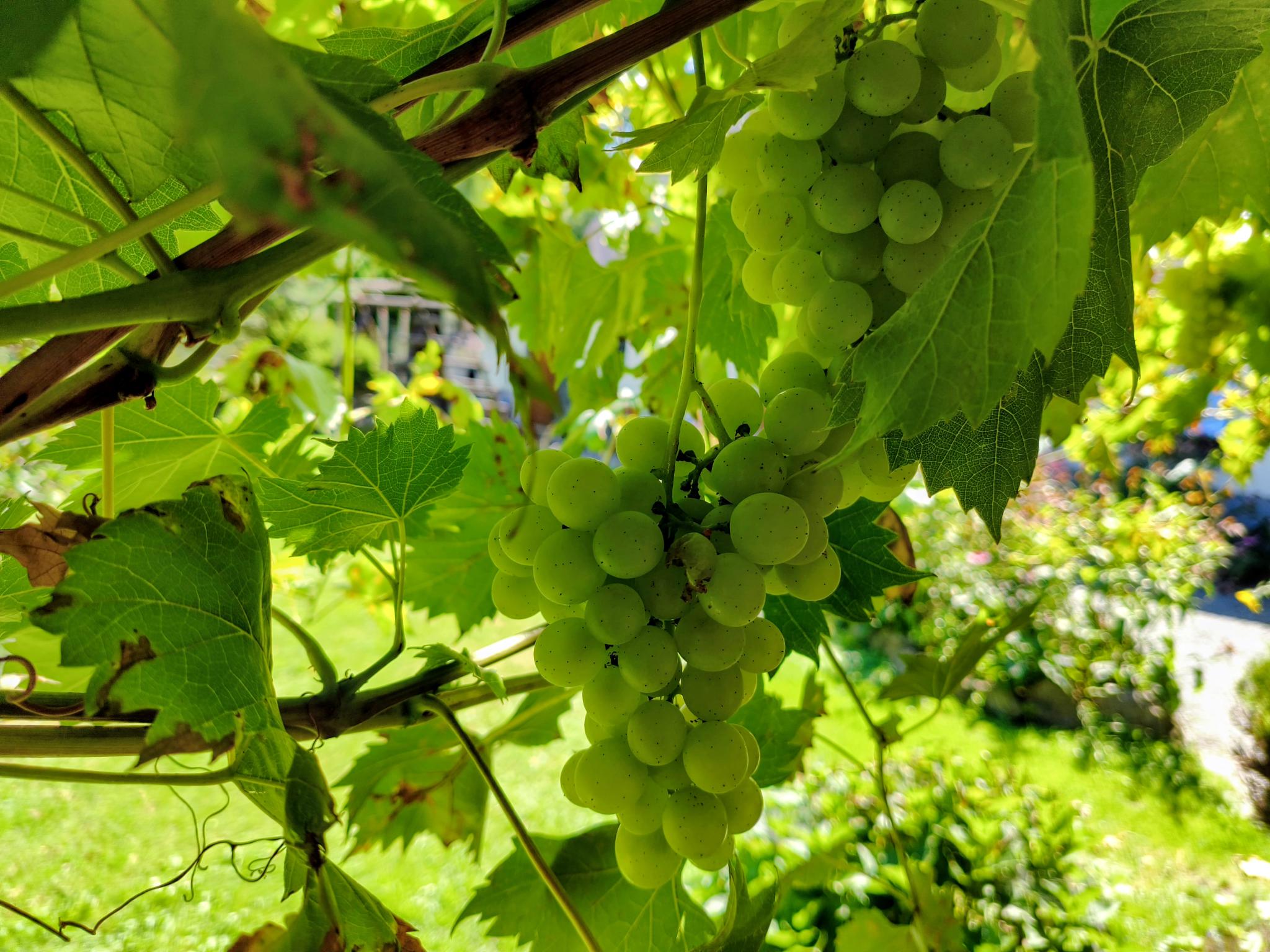
Fresh grapes are one of the easiest fruits to turn into juice at home. But what about the parts that are usually removed before eating? Do you need to remove every grape seed and carefully pull away every small stem before putting grapes into a slow juicer?
We decided to find out.
We picked fresh grapes directly from a grapevine and put them through a Sana 727 horizontal slow juicer. The grapes had their seeds and some small, soft stems still attached. We wanted to see how the juicer would handle them and, just as importantly, how the finished juice would taste.

From the Vine to the Juicer
We collected a basket of fresh grapes and removed the larger, woody parts of the stems. However, we did not spend time removing every small stem between the individual grapes.
The grape seeds were left in as well.
The goal was to see whether a slow juicer could handle the grapes with minimal preparation while still producing good-quality juice.
For the test, we used the Sana 727 with its fine juicing screen.

Why the Fine Screen?
The fine screen is designed to separate the juice from most of the solid material, producing a smooth, clear juice.
Grapes are naturally soft and juicy, so they don't require much preparation before juicing. Using the fine screen also allows the grape skins, seeds and small pieces of stem to be separated from the juice during the extraction process.
The result is a fresh grape juice without having to process the grapes first.

What Did the Grape Juice Look Like?
The fine screen produced a smooth, fresh grape juice while separating the skins, seeds and other solid material into the pulp.
The freshly extracted juice had the characteristic color and appearance of the grapes we started with, but without the seeds and skins.
And of course, the final question was the most important one: How does it taste?
We tasted the fresh grapes and the finished juice to see whether leaving the seeds and small stems attached had affected the flavor. It was sweet and rich, with a slight earthy tone.

How Did the Juicer Handle the Seeds and Stems?
The Sana 727 handled the grapes without difficulty.
The grapes, including their seeds and small soft stems, were fed directly into the juicer. The solid material was separated from the juice and discharged as pulp.
There was no need to remove the seeds individually or pull away every small stem.
That said, there is an important distinction between small, soft grape stems and large, woody stems. We removed the larger woody sections before juicing. As with any juicer, hard or unusually tough material should not be deliberately forced into the machine.
So, Can You Juice Grapes With Seeds and Stems?
Yes. Our test showed that you don't need to remove grape seeds or carefully separate every small, soft stem before juicing.
For fresh grapes:
- Wash the grapes thoroughly.
- Remove large or woody sections of stem.
- Leave the seeds in.
- Small, soft stems can remain attached.
- Juice the grapes using a suitable slow juicer and fine screen.
This makes preparing grapes for juicing much quicker and easier, especially when you're working with fresh grapes straight from the garden.
The exact flavor and juice yield will naturally depend on the grape variety and how ripe the grapes are. But if you've been avoiding fresh grapes because of the seeds and small stems, there's no need to prepare them quite so meticulously.
From the vine to the glass—with the seeds and small stems left in.
.jpg)
.jpg)