
Why Do Some Juicers Have a 15-Minute Time Limit?
Have you ever noticed that some slow juicers recommend running for no more than 15 or 20 minutes, while others claim they can operate continuously? At first glance, this can be confusing. After all, if two juicers have similar power ratings, why can one process an entire harvest of apples while another needs to stop and cool down? The answer lies not in the wattage, but in the engineering.
Not All Motors Are Created Equal
Most traditional slow juicers use an AC induction motor. These motors are reliable, relatively inexpensive, and have powered household appliances for decades.
However, they also have limitations. As they work, they generate heat. During normal home use this isn't usually a problem, but when processing large quantities of produce, the motor temperature gradually rises. To protect the motor and extend its lifespan, manufacturers often recommend limiting operation to around 15–30 minutes before allowing the machine to cool.
Many juicers also include a thermal protection sensor. If the motor becomes too hot, this safety feature automatically switches the motor off to prevent damage. Once the motor has cooled sufficiently, the juicer can usually be restarted.
It's important to remember that there isn't a stopwatch inside the machine. How quickly a motor heats up depends on several factors, including the type of produce being juiced, how hard the motor is working, and even the ambient room temperature. Juicing soft oranges on a cool winter morning places much less demand on the motor than processing kilos of fibrous celery or carrots in a warm kitchen.
For most families making one or two glasses of juice each morning, these limitations are rarely noticed.
But what if you have a large vegetable garden? Or you juice for several people? Or you're preparing juice for the week in one session?
This is where premium juicers begin to differ.
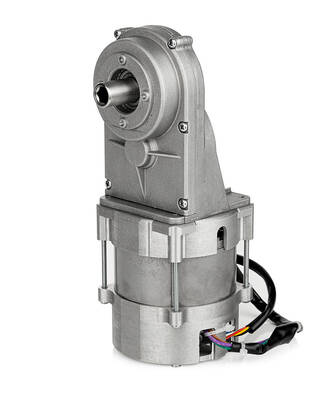
Enter the BLDC motor
Some premium slow juicers use a Brushless DC (BLDC) motor instead of a traditional induction motor.
Although BLDC motors are significantly more expensive to manufacture, they offer several advantages that make them particularly well suited to high-end kitchen appliances.
Quieter Operation
One of the first things you'll notice is how quietly a BLDC-powered juicer runs.
This makes early morning juicing far more pleasant and is especially appreciated in open-plan homes where excessive noise can disturb the rest of the family.
Greater Energy Efficiency
Because brushless motors are electronically controlled, they convert electrical energy more efficiently and produce less waste heat than conventional induction motors.
While this probably won't make a noticeable difference to your electricity bill, it does contribute to cooler operation and reflects the more advanced design of the motor.
Longer Operating Sessions
Since BLDC motors generate less heat, they are well suited to extended juicing sessions. However, it's important to understand that the motor is only one part of the machine. The recommended operating time also depends on the gearbox, bearings, electronics, cooling system, and the overall thermal design of the appliance. This explains why two juicers equipped with BLDC motors can still have different recommended operating times.
The Sana 727 and 929 models have an unlimited operating time.
Variable Speed: A Feature That's Actually Useful
Perhaps the greatest advantage of a BLDC motor is one that many consumers overlook. Because the motor is electronically controlled, manufacturers can precisely adjust its speed. Instead of operating at one fixed speed, the juicer can be optimized for different ingredients and accessories.
For example:
- Lower speeds can improve the processing of leafy greens and other fibrous produce.
- Higher speeds may work better for juicy fruits.
- Optional accessories, such as oil extractors, often benefit from higher rotational speeds.
- Different homogenizing functions can also perform better at different speeds.
Rather than simply spinning faster, the motor can be matched to the task at hand.

Why Doesn't Every Juicer Use a BLDC Motor?
The simple answer is cost.
BLDC motors are significantly more expensive than traditional induction motors, and they require sophisticated electronic controllers to operate. For manufacturers competing primarily on price, a conventional induction motor remains the more economical choice.
For premium juicers, however, the additional investment can provide noticeable benefits in everyday use.
Looking Beyond Wattage
When comparing juicers, many people look first at the motor's wattage. It's understandable. We've been conditioned to think that a bigger number means a more powerful appliance. For high-speed appliances such as blenders, that's often true. Blenders operate at extremely high speeds, so they require powerful motors to maintain those speeds while crushing ice and blending frozen ingredients.
Slow juicers are different. Instead of spinning at thousands of revolutions per minute, a slow juicer typically operates at just 40–70 RPM. The goal isn't speed, it's controlled, steady crushing and squeezing.
The type of motor is far more important than the wattage printed on the box. The quality of the gearbox, the juicing mechanism, the auger, the juicing screen, and the overall engineering all contribute to how efficiently a juicer extracts juice and how pleasant it is to use.
A Motor Is Only One Part of the Story
The motor is one of the most important components of any juicer, but it doesn't work alone. The gearbox, auger design, juicing screen, electronics, pressure sensors, cooling system, and even the software controlling the motor all influence how a juicer performs in real-world use. This is why two juicers with similar motors can behave very differently when processing the same ingredients. When comparing premium juicers, it's worth looking beyond a single specification. The best machines are carefully engineered systems in which every component works together.
Is a BLDC Juicer Worth It?
That depends on how you use your juicer.
If you prepare a single glass of juice each morning, you may never notice the difference.
But if you regularly juice leafy greens, prepare large batches, appreciate quieter operation, or want the flexibility of variable speed, a BLDC motor offers real advantages that you'll notice every time you use the machine.
It's one of the reasons premium slow juicers often feel different—not because they're more powerful, but because they're engineered differently.
Key Takeaways
- Many slow juicers recommend a 15–30 minute operating time to prevent motor overheating.
- Thermal protection sensors automatically switch the motor off if it becomes too hot.
- A juicer's actual run time depends on the produce being processed, the ambient temperature, and the overall machine design.
- Premium BLDC motors run more efficiently, produce less heat, operate more quietly, and enable variable speed control.
- The motor is only one part of the equation—gearbox design, electronics, cooling, and the juicing mechanism all influence performance.