
How to Choose a Grain Mill
Freshly milled flour offers exceptional flavor, aroma, and freshness that simply can't be matched by flour that has spent weeks or months on a store shelf. A home grain mill allows you to grind flour exactly when you need it, giving you complete control over your ingredients.
But which grain mill is right for you?
First, Decide What You Want to Make
Before choosing a grain mill, consider how you plan to use it.
If your goal is to make fresh flour for bread, pizza, pastries, and baking, an electric grain mill is the best choice. Modern grain mills can produce everything from coarse meal to ultra-fine flour, making them suitable for a wide range of recipes.
For most households, a grain mill quickly becomes an essential part of the kitchen, providing fresh flour whenever it is needed.
Consider How Much Flour You Need
One of the biggest differences between grain mills is capacity.
If you bake occasionally or prepare one or two loaves at a time, a standard-capacity grain mill will easily meet your needs.
For larger families, frequent bakers, or those who regularly prepare several loaves at once, a larger-capacity mill with a more powerful motor can make milling faster and more convenient.
Higher-capacity mills typically feature:
- Larger grain hoppers
- Faster milling speeds
- More powerful motors
- Greater output for larger batches
Stone Milling Matters
Quality grain mills use specially designed millstones to produce flour at low temperatures.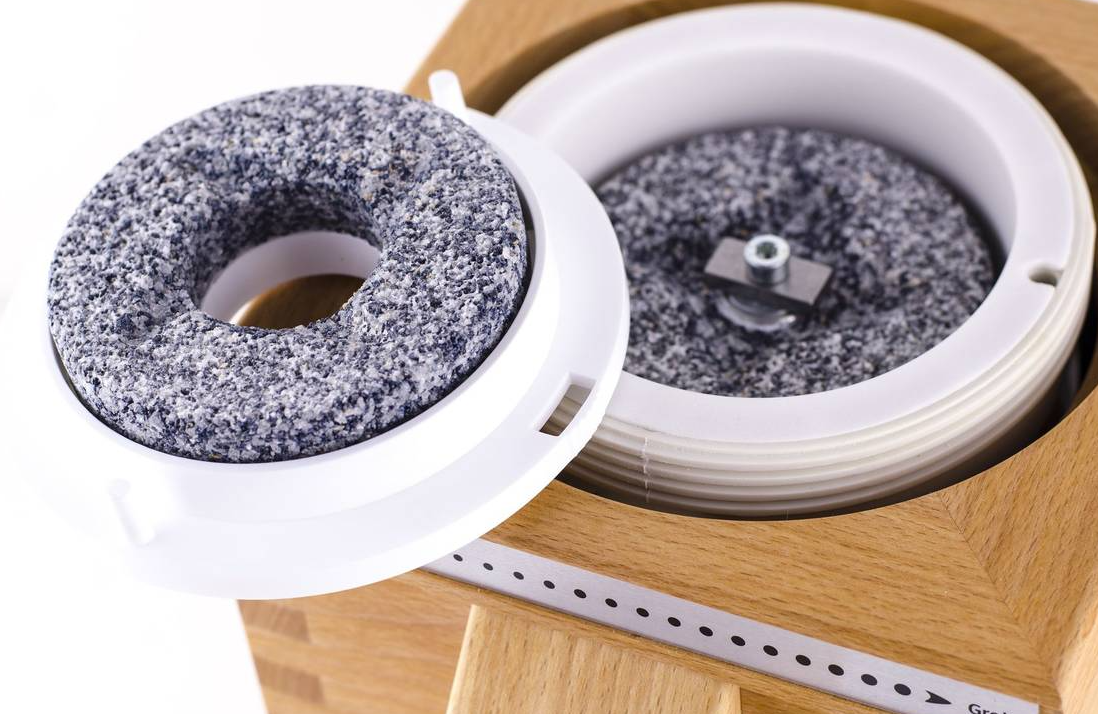
This gentle milling process preserves the grain's natural flavor and allows you to create flour ranging from coarse meal to exceptionally fine baking flour.
Modern ceramic-corundum millstones are extremely durable and designed to provide decades of reliable performance with minimal maintenance.
A Grain Mill You'll Be Proud to Display
Unlike many kitchen appliances that spend most of their lives hidden in a cupboard, grain mills are often kept on the countertop and used regularly.
Many premium grain mills are crafted from solid hardwood, combining natural beauty with exceptional durability. A well-made wooden grain mill can become a permanent fixture in the kitchen, offering both practical performance and timeless design.
For many home bakers, appearance is an important consideration. A beautifully crafted grain mill not only produces fresh flour, but also adds warmth and character to the kitchen.
Electric or Manual?
Most home bakers prefer the convenience of an electric grain mill.
Electric mills offer:
- Fast milling
- Consistent results
- Easy flour texture adjustment
- Minimal effort
Manual grain mills and flakers remain a good option for those who prefer a traditional approach, but most households appreciate the speed and convenience of an electric mill for everyday use.
Process a Wide Variety of Grains
Modern grain mills can process far more than wheat.
Depending on the model, you can mill:
- Wheat
- Spelt
- Rye
- Barley
- Oat groats
- Buckwheat
- Millet
- Rice
- Quinoa
- Corn
- Dry legumes
Many home bakers enjoy experimenting with different grains to create breads and baked goods with unique flavors and textures.
Which Grain Mill Is Right for You?
For most households, a high-quality electric grain mill offers the ideal balance of convenience, performance, and versatility.
If you bake regularly and want fresh flour for everyday use, a standard-capacity grain mill is usually the perfect choice.
For larger families and enthusiastic home bakers, a high-capacity mill can make processing larger quantities of grain faster and more convenient.
And if you enjoy fresh oat flakes for breakfast, grain flakers can be a useful addition to your kitchen. If you own a Sana horizontal juicer, the oil extractor attachment can also make oat flakes.
A Long-Term Investment in Better Baking
A quality grain mill is a tool that can serve your kitchen for decades. By choosing a model that matches your baking habits and household needs, you'll enjoy fresh flour, better flavor, and greater control over your ingredients every time you bake.
Once you've experienced the aroma and flavor of freshly milled flour, it's difficult to go back to store-bought alternatives.